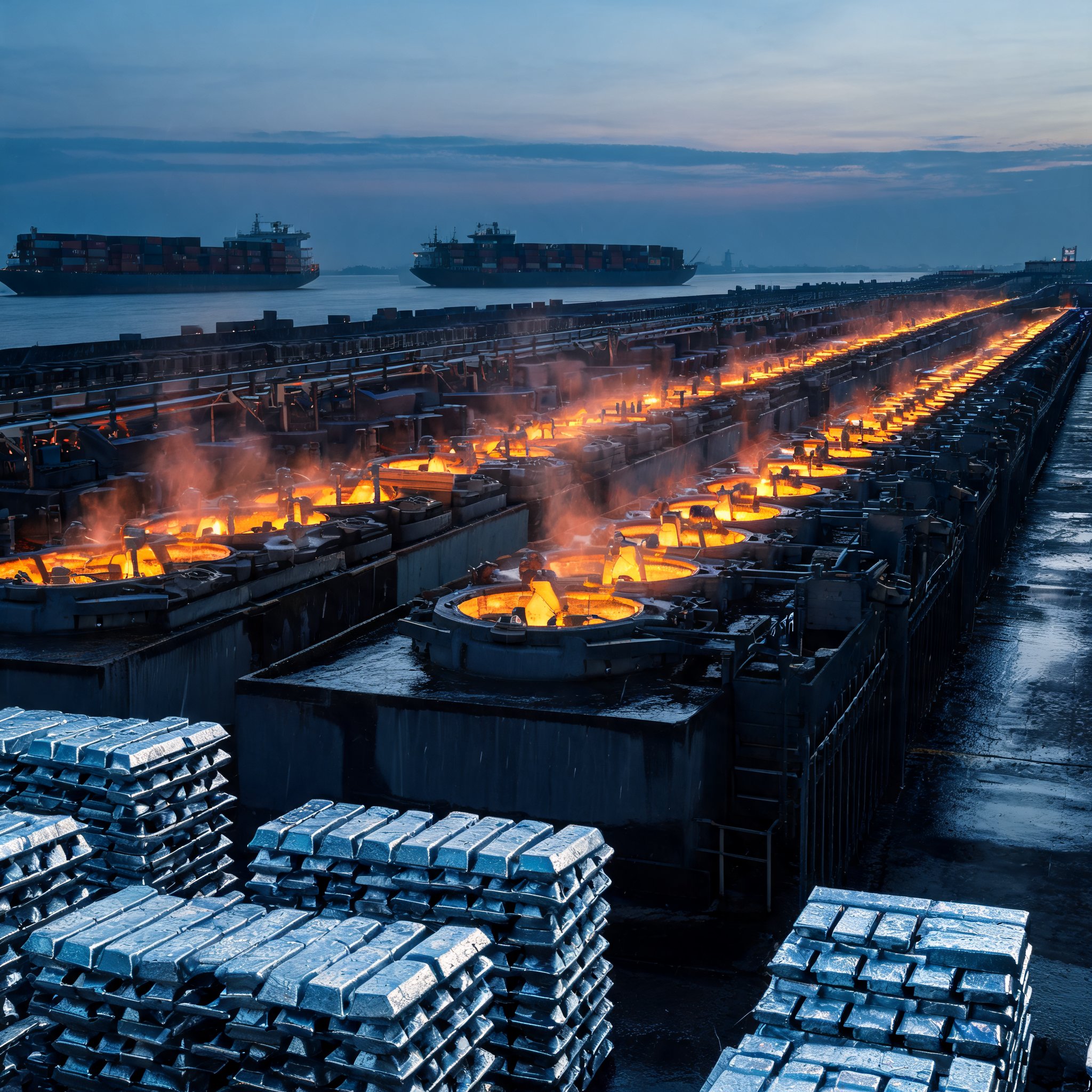
Aluminium Bahrain B.S.C. (Alba), described as the world's largest aluminium smelter on one site, reported Q3 2026 profit attributable to equity holders of BD18.5 million ($49.3 million), down 72.5% from BD67.3 million ($178.9 million) in Q3 2025. The company attributed the decline to lower production availability and regional shipping and logistics disruptions, while noting improving operational stability during the quarter.
Basic and diluted earnings per share were 13 fils, compared with 48 fils a year earlier. Total comprehensive income attributable to equity holders fell 69.6% year on year to BD20.5 million ($54.5 million) from BD67.5 million ($179.4 million).
Nine-month earnings rise despite shipment decline
The quarterly result contrasted with Alba's first nine months. Profit attributable to equity holders rose 44.3% year on year to BD158.7 million ($422.1 million), from BD110 million ($292.4 million) in the same period of 2025. Basic and diluted earnings per share improved to 112 fils from 78 fils, while total comprehensive income increased 51.8% to BD161.1 million ($428.4 million) from BD106.1 million ($282.2 million).
Alba's balance sheet also strengthened. Total equity attributable to owners reached BD2,183.6 million ($5,807.4 million) at September 30, 2026, up 4.8% from BD2,084.6 million ($5,544.2 million) at December 31, 2025. Total assets rose 9.8% to BD2,880.1 million ($7,659.8 million) from BD2,623.3 million ($6,976.8 million).
Operationally, sales volume over the nine months reached 800,792 tonnes, down 33% year on year, and net finished production fell 41% to 709,395 tonnes. Alba said the lower output primarily reflected the controlled shutdown of Reduction Lines 1, 2 and 3 amid regional disruptions, while shipping and logistics challenges affected its ability to maintain usual sales volumes.
Value-added products accounted for 67% of total shipments. VAP sales were 532,591 tonnes, down 41% year on year, as Alba continued to prioritise a value-added product mix despite lower overall volumes. The company said operational stability improved in Q3 2026 as it progressively restored capacity following controlled adjustments to address raw-material constraints. Disciplined alumina management and supply-chain planning helped protect smelter stability and asset integrity, it added, while Reduction Line 4 continued progressing towards full ramp-up.
Market deficit supports prices
Alba's market assessment pointed to supportive global aluminium fundamentals, even as economic and industrial conditions remained uneven. Global demand grew by around 1% year on year, supported by automotive, solar, renewable energy and power transmission sectors. China recorded demand growth of approximately 4% year on year, while construction-related weakness contributed to demand declines of around 1% in Europe and 8% in the US.
Global aluminium production contracted by approximately 1% year on year. A 6% decline outside China outweighed 3% growth in China, where output remained constrained by the country's capacity ceiling. The global market remained in deficit by approximately 485,000 tonnes, including a deficit of around 108,000 tonnes outside China. LME aluminium prices averaged $3,226 per tonne in Q3 2026, up 23% year on year, while LME inventories fell 53% year on year to 241,000 tonnes.
Looking ahead, Alba expects constrained supply and low inventories to remain supportive of aluminium prices, though macroeconomic and geopolitical developments could create near-term volatility. It expects demand to remain resilient but uneven, with China supported by solar, automotive and export-oriented manufacturing, while higher interest rates, trade tensions and geopolitical uncertainty pose downside risks.
Alba said its 2026 priorities centre on restoring production capacity and operational resilience, including the full ramp-up of Reduction Line 4, protecting smelter stability and asset integrity, strengthening supply-chain resilience and retaining flexibility to respond to changing regional conditions. Longer-term plans include progressing the proposed Aluminium Dunkerque transaction through remaining approvals and advancing construction and commissioning of Alba-Daiki Sustainable Solutions (ADSS). The company also plans to continue its decarbonisation programme, focusing on energy efficiency, responsible sourcing and lower-carbon aluminium production, while protecting market access and customer relationships through differentiated, value-added and certified products.