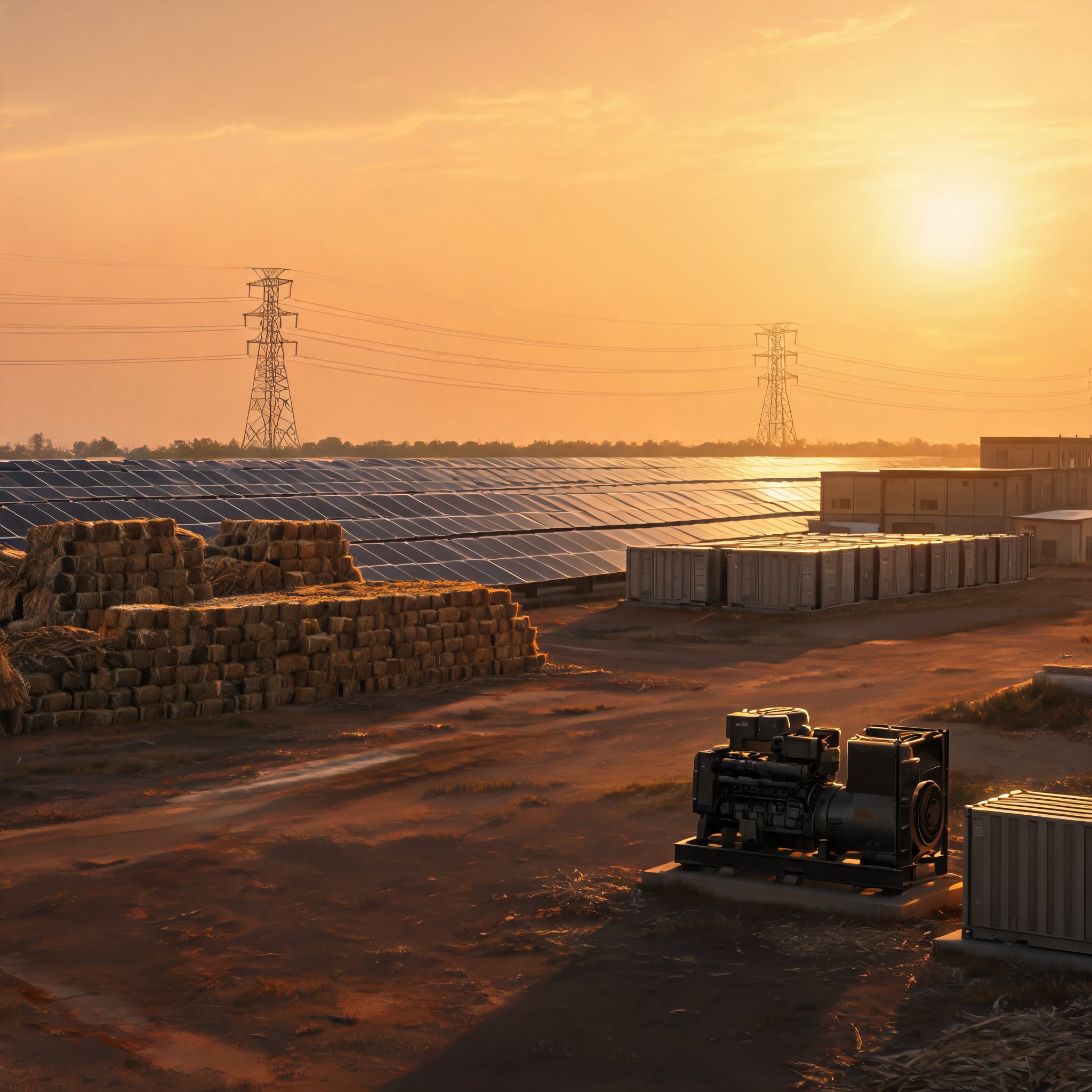
The Republic of the Congo has launched a study to assess how best to supply electricity to its special economic zones and industrial facilities, as demand rises and supply constraints affect production.
Michel Djombo, the country's Minister of Industrial Development, SEZs and Private Sector Promotion, launched the initiative earlier this week. The study will be supervised by the Ministry of Energy and Hydraulics, implemented by the National Agency for Rural Electrification and supported technically by the United Nations Development Programme.
Four supply options compared
According to the plan set out at the launch, the work will compare four potential approaches to meeting industrial electricity demand: solar paired with battery storage; biomass and cogeneration using agricultural, forestry and agro-industrial residues; connections to the national grid where available; and hybrid energy systems.
The four options differ in their reliance on the national network and on site-specific resources. Biomass and cogeneration, for instance, depend on the availability of agricultural, forestry and agro-industrial residues, while grid connections depend on the network reaching the site.
The study is also expected to establish a pricing benchmark for energy solutions in the Congolese industrial market. A benchmark of this kind would give industrial buyers a reference point when weighing offers from different suppliers and technologies.
Minister questions solar pricing
Speaking at the launch event, Djombo questioned solar electricity offers priced between XAF 130 ($0.22) and XAF 150/kWh, describing some of them as opportunistic. He said international comparisons would help establish fair and sustainable pricing.
The minister also highlighted the cost of relying on diesel generators during interruptions to electricity supply, saying the price of generated electricity can reach almost XAF 200/kWh. At the prices cited at the launch, diesel generation was the most expensive option mentioned.
Electricity supply constraints are affecting industrial operators in the country, Djombo continued, with some companies reportedly having to suspend production lines. Despite high diesel prices, he said some operators remain reluctant to commit to alternative energy solutions and are waiting for market conditions to become clearer.
Commercial models under review
The initiative also plans to examine commercial arrangements for supplying industrial customers, including turnkey installations financed directly by businesses, financing services for equipment purchases and the introduction of independent power producers. It is expected to identify bankable projects capable of attracting public and private investment.
Small operational solar base
Figures available in the Africa Solar Industry Association's project database identify 35.6 MW of operational solar in the Republic of the Congo to date, of which 27 MW is listed as unidentified commercial and industrial projects.