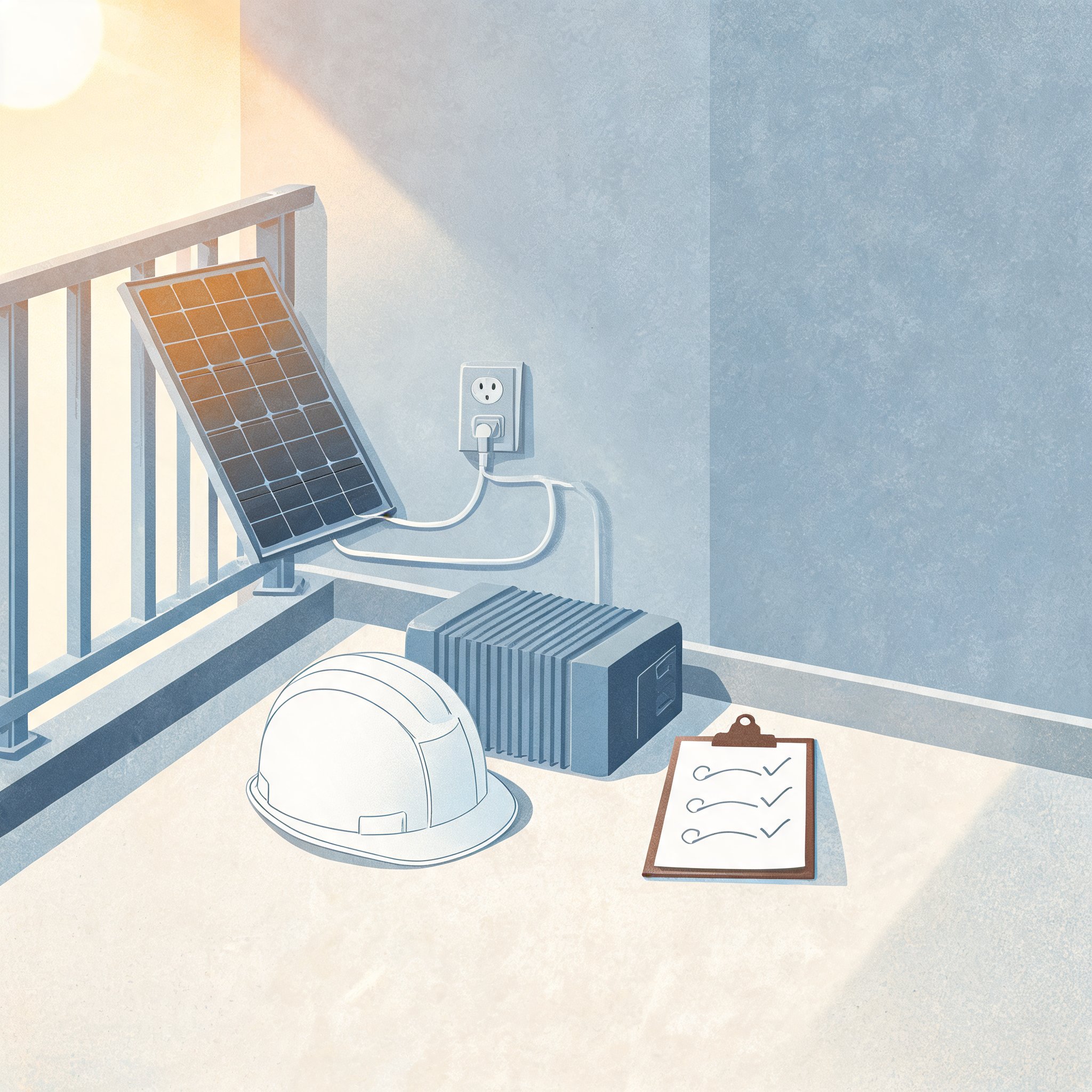
The Electrical Safety Roundtable (ESR) has published new guidance aimed at helping consumers make informed and safe choices when buying, installing and using plug-in solar devices.
The organisation said there is more to consider than simply picking up a device from a supermarket, DIY store or online retailer. The guidance sets out the checks and precautions needed to help ensure that such systems are compliant, suitable and installed correctly.
Compliance marking and product labelling
According to the ESR, a compliant plug-in solar device should meet the Plug-in Solar Device Interim Product Specification and be clearly marked, with a statement confirming compliance supplied alongside it. Product labelling should identify:
- the manufacturer;
- the model or serial number;
- voltage, frequency, current and rated power;
- the IP rating and protection class.
Consumers are advised to buy from reputable suppliers, follow all instructions and never modify the plug, cables, inverter, panels, connectors or any other supplied components.
Installation, checks and notification
Ideally, the device should be connected to a nearby external socket-outlet that is suitably located and protected. Cables must not be trapped in doors or windows, as this may damage them, and poorly routed or secured cabling can create trip hazards as well as further risk of damage.
The ESR strongly recommends that consumers find a qualified and competent electrician to carry out the necessary checks on their electrical system before installing a plug-in solar device. Consumers should also contact their insurer before buying. People living in flats or apartments may need approval from the building owner, while tenants must seek permission from their landlord; managing agents, planning authorities and other interested parties should be informed where applicable.
Once a device is installed, the Distribution Network Operator must be notified within 28 days. The instructions supplied with a compliant system should explain this process.
Supporting consumers
The guidance is intended as a resource for anyone supporting consumers who are considering plug-in solar. Letting agents and landlords can share it with tenants and residents to explain the permissions and safety checks that may be required, while organisations can use it to raise awareness and signpost clear, consistent information. Electricians can also share it with potential customers to explain why checks by a qualified and competent electrician matter before installation.
Nick Hayler, chair of the Electrical Safety in the Home group, said the organisation supports innovation that can help households embrace renewable energy and reduce their bills, but that it has to be done safely. He added that consumers should follow the guidance and use a competent and qualified person to help ensure their plug-in solar device is suitable and installed correctly.
By making the guidance widely available, the ESR said it aims to help consumers benefit from plug-in solar while ensuring safety remains the priority.