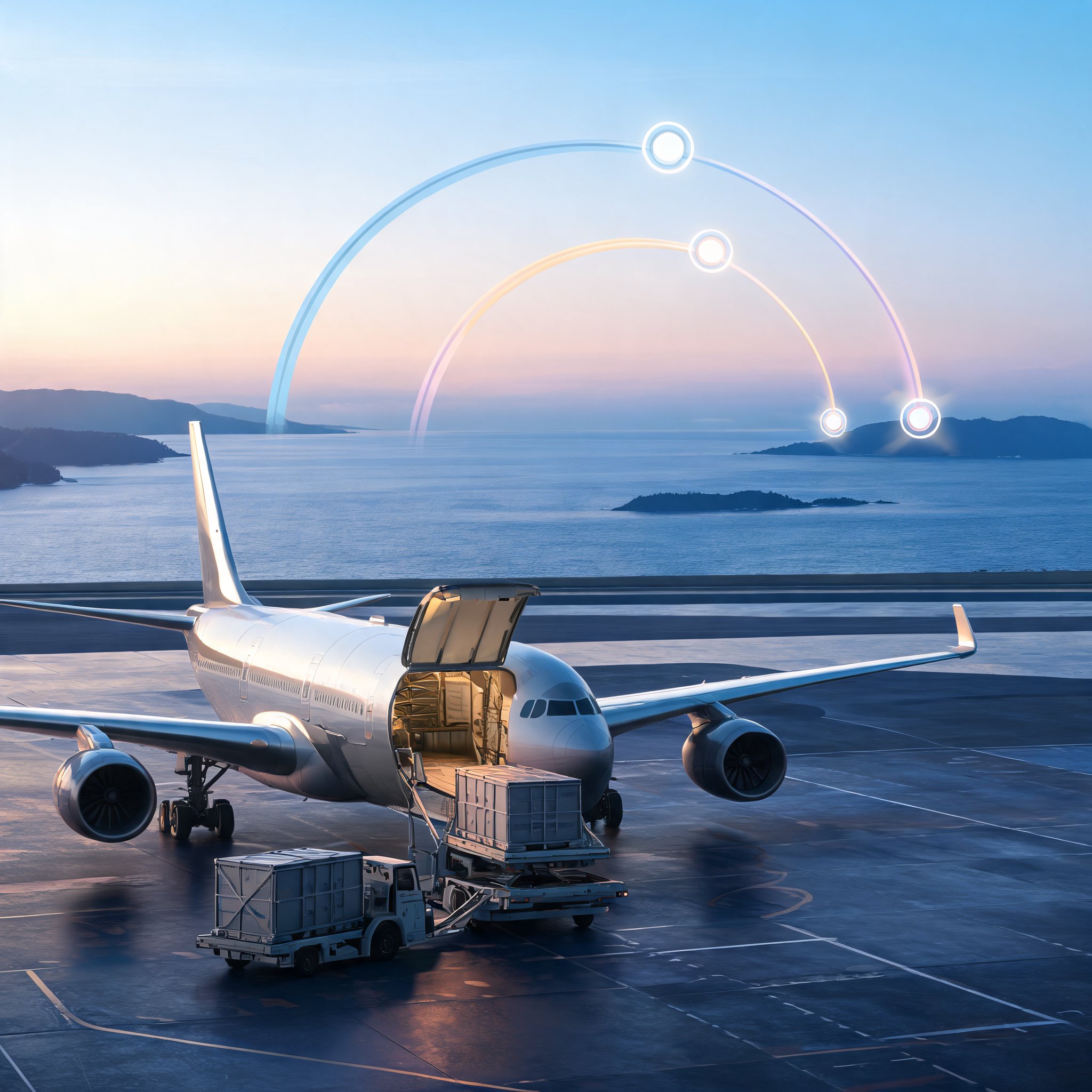
FedEx has expanded its trans-Pacific network with 567,000 kilograms of additional weekly capacity between Asia Pacific and the United States, the carrier said.
The capacity is delivered through three routing variations. These connect FedEx’s Asia Pacific hub in Guangzhou and sub-regional hubs in Shanghai and Osaka with its gateway in Clark, the Philippines, then pass through Anchorage, Alaska, to the FedEx World Hub in Memphis, Tennessee.
New connections and markets
Businesses in Singapore, Malaysia, Thailand, Vietnam and Hong Kong can access the additional capacity through connections via Clark and Shanghai, according to the company.
FedEx said the new Boeing 777F service operates five times a week. It is expected to support customers in advanced industrial manufacturing, AI infrastructure and premium e-commerce, where the company says demand is rising.
The enhanced network also adds a five-times-weekly connection for Asia Pacific customers to Dallas–Fort Worth via Anchorage. FedEx describes this as an additional gateway to a leading US technology and data-center market.
Peak-season preparation
Salil Chari, president of FedEx Asia Pacific, said global supply chains are becoming increasingly interconnected, particularly in advanced manufacturing, AI-related industries and premium e-commerce. Chari said the added capacity comes as customers prepare for higher shipping volumes ahead of the year-end peak season and need reliable access to capacity, speed and global connectivity.
Chari added that the additional flights strengthen links between Asia Pacific and key US markets, including Dallas–Fort Worth, and support growth in semiconductors, technology and AI-driven industries, according to the company.