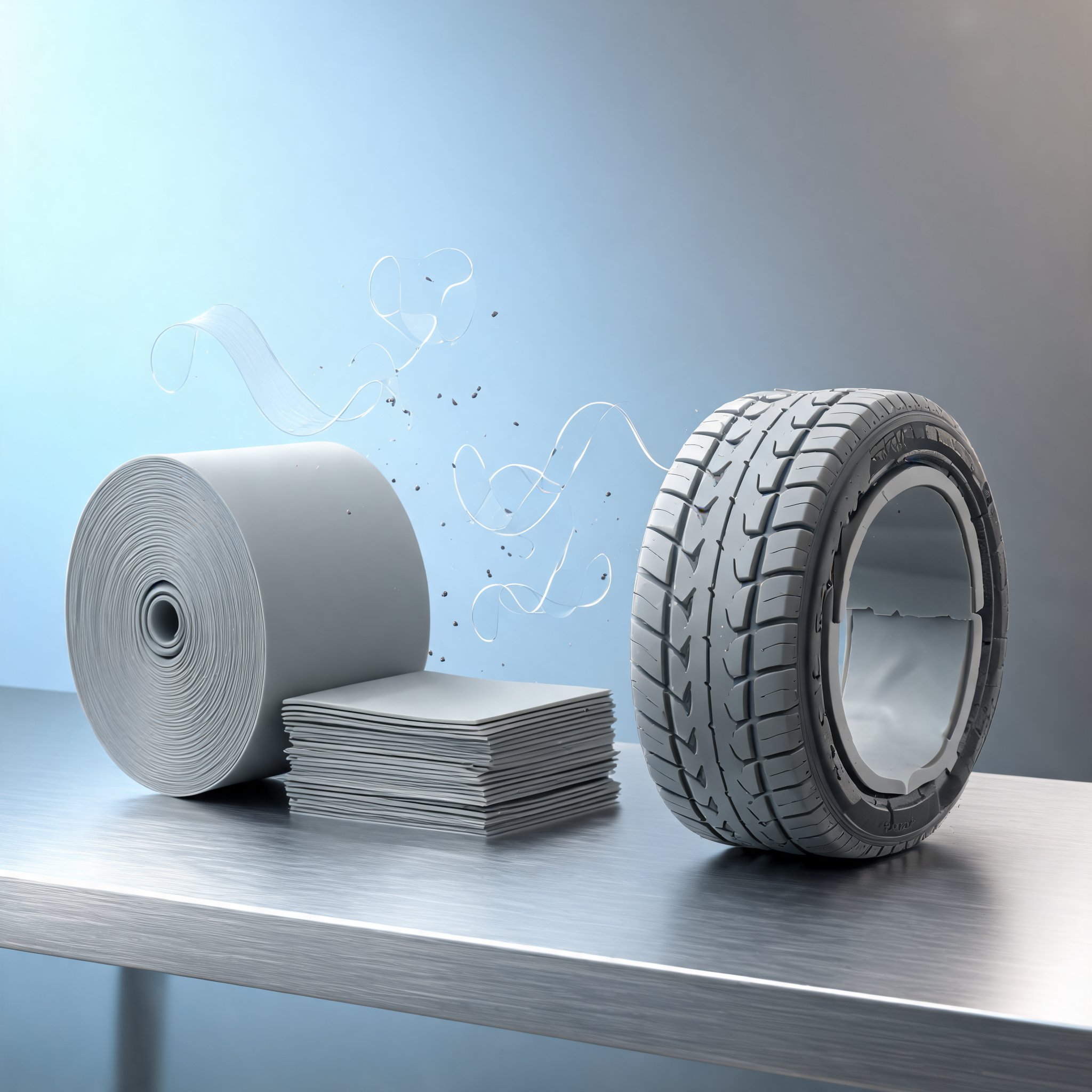
The global market for solution styrene-butadiene rubber (S-SBR) is projected to reach US$6 billion by 2030, up from an estimated US$4.2 billion in 2024, according to a November 2026 report published by Research and Markets. The report puts the compound annual growth rate for the 2024–2030 period at 6.1%.
The outlook reflects growing demand for high-performance and fuel-efficient tires, advances in rubber manufacturing technology, and expanding use across the automotive, footwear, adhesives and polymer modification industries. S-SBR is a synthetic rubber valued for high abrasion resistance, tensile strength and flexibility.
Tires remain the core application
Those properties keep S-SBR central to high-performance tire compounds, where the report says it supports improved fuel efficiency, enhanced wet grip and lower rolling resistance compared with traditional rubber materials. The automotive industry is expected to remain the main source of demand through the forecast period, as tire makers respond to requirements for safety, durability and fuel economy.
Tires are projected to account for US$4.7 billion of the 2030 total, growing at a 6.5% CAGR and ranking as both the largest and the fastest-growing application segment in the study. The report also identifies expanding electric vehicle production and sales as a factor that could increase S-SBR use in EV tires, while stressing that high-performance and environmentally conscious tire designs are already supporting market expansion.
Process and material innovation
Developments in polymerization and processing are described as improving product performance and versatility. Advances in polymerization techniques allow manufacturers to tailor rubber grades to specific applications, while nanotechnology and advanced fillers are credited with better mechanical performance and durability. Improvements in solution polymerization and advanced mixing processes are said to raise production efficiency and product quality. Research and development spending by major industry participants is expected to support further innovation.
Beyond tires: footwear, adhesives and construction
Footwear is projected to grow at a 5.7% CAGR over the forecast period, supported by demand for durable and flexible materials. S-SBR is also used in adhesives and sealants, polymer modification and other industrial applications. The report points to opportunities linked to the adhesives and sealants industry and to a recovery in global construction, where infrastructure investment, building activity and urbanization could lift demand for construction-related materials.
Regional split and competitive picture
The United States market was valued at US$799.4 million in 2024. China is expected to post the strongest growth, with a forecast CAGR of 7.9% and a market of US$1.2 billion by 2030. Asia-Pacific is highlighted as a key growth region, while North America and Europe are also described as significant opportunities. The report additionally examines Japan, Canada, Germany, France, Italy, the United Kingdom, India, South Korea and other markets.
Suppliers identified in the report include ARLANXEO, Asahi Kasei, Chi Mei, Dynasol, Goodyear, JSR, LANXESS, LG Chem, SIBUR, Sinopec, Sumitomo Chemical Asia, Synthos, Taiwan Synthetic Rubber, Trinseo and Versalis. Vertical integration and a strategic focus on tire applications are listed among the competitive strategies in play.
Risks to the forecast
The growth outlook is set against challenges from international trade developments, supply chain disruptions and economic uncertainty. The report incorporates updated analysis of tariff measures across more than 180 countries and their potential effects on sourcing, supply chains and geographic market positioning. It also includes revised forecasts to 2030, historical market performance from 2015 to 2023, and competitive market share estimates for 2025.
On the report's projections, continued expansion will depend on automotive demand for materials that improve tire performance, fuel efficiency and vehicle safety, alongside regional growth in China and other parts of Asia-Pacific, technological advances and broader industrial uptake.