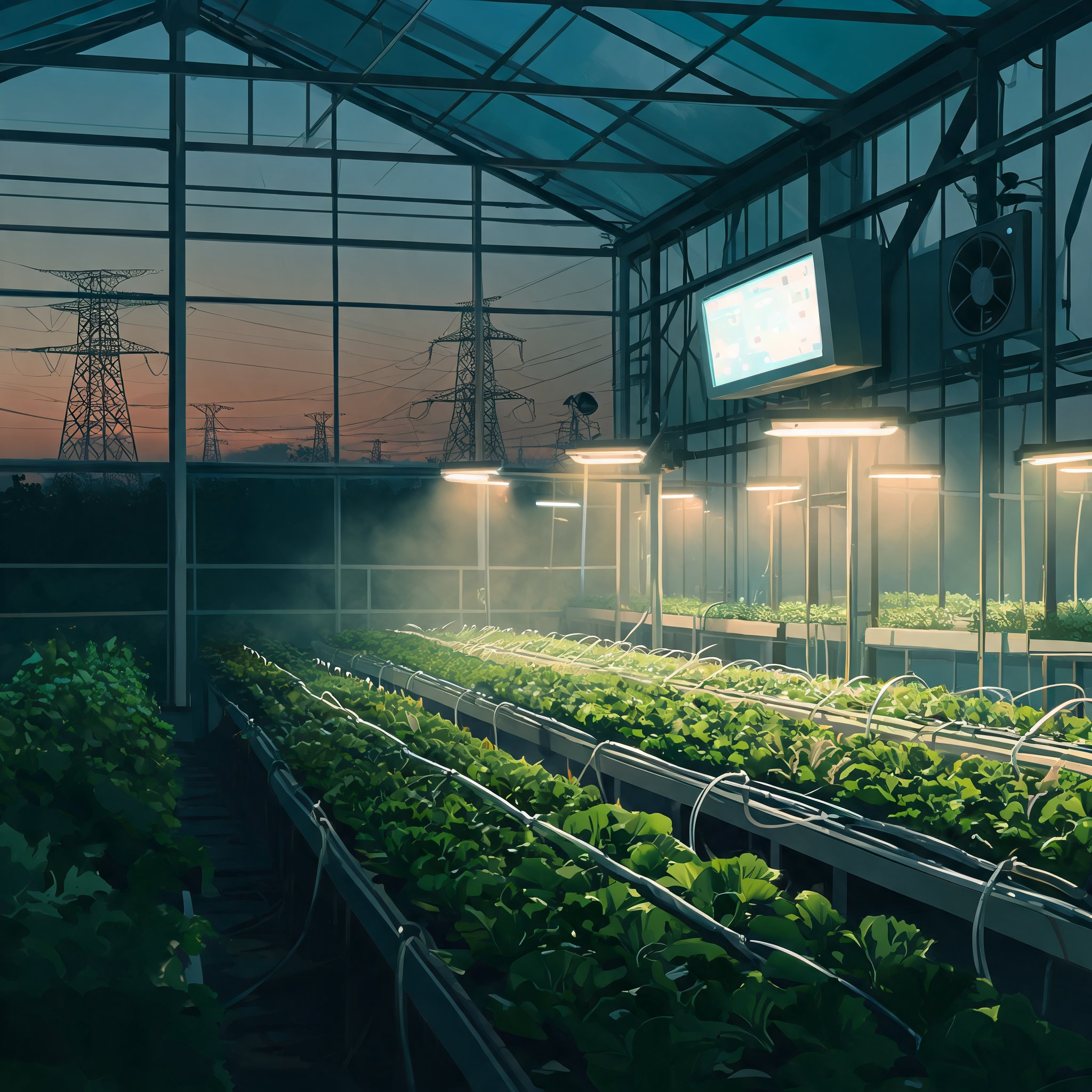
Utilities put substantial effort into preparing for the day when electricity supply cannot meet demand. Most greenhouses have not, and that gap leaves fans, pumps, irrigation, heating and climate controls exposed to a shutdown that may arrive with only minutes of warning.
Ian Knisely, an energy analyst at Energy Bridge Advisors who previously worked at BrightFarms and Curaleaf, argues that growers should treat a grid emergency as something to plan for rather than something to react to.
What the utility bill already tells you
On a California utility bill there is a line many growers skip past: the rotating outage group or block, which shows where a site stands in the queue when the grid runs short. Every grower holds a place in that line whether or not it is printed. Federal reliability standards — NERC's EOP-011 — require grid operators across the country to keep emergency plans for cutting load; California is unusual in putting the assignment on the customer bill.
When such a plan is triggered, power is shut off systematically, often with only minutes of notice. Hospitals and similar critical facilities are shielded where possible. Nearly everyone else, greenhouses included, is not. Rolling outages have hit several regions in recent years, during heat waves as well as winter storms.
Outage versus curtailment
The difference, as Knisely frames it, is control. An outage stops everything at once. A planned curtailment is a decision made in advance about which loads drop, by how much, and what keeps running to protect the crop. He describes a curtailment plan as a written playbook for the hours when the grid is strained, and reduces it to four steps.
Four steps to a written plan
- Inventory the load. List the major equipment — supplemental lighting, fans, evaporative cooling, heating, pumps, dehumidification, controls and any cold storage — with a rough figure for how much power each draws.
- Sort by criticality. Some loads can be dropped entirely for a few hours without harming the crop. Others can be trimmed, by dimming lights, staggering fans or shifting a setpoint a few degrees. A third group must stay on regardless, including controls, alarms and whatever keeps the most sensitive crop alive. The sorting depends on what is grown and at which stage, so it shifts through the season.
- Act on the forecast. An outage order may come with minutes of notice, but heat waves and cold snaps are forecast days ahead, and grid operators usually issue public alerts before an emergency. In summer that means pre-cooling in the morning, irrigating early and closing shade curtains before the afternoon peak. In winter it means heating ahead of the cold peak, closing thermal curtains early, and making sure backup heat is fueled and tested.
- Assign roles. Decide who receives the alert, who makes the decision and who carries it out. If the environmental controller can run the sequence automatically, program it and test it. A plan that depends on one person answering a phone at 4 p.m. on a Saturday is not a plan, Knisely writes.
The number the grid will pay for
Completing those steps produces a figure: how many kilowatts a site can give up, for how long, and at what cost to the crop. That is the number the grid is willing to pay for, Knisely notes. Before ordering outages, utilities and grid operators pay customers that agree in advance to cut load, since a megawatt that disappears on request costs less than one bought at emergency prices. That market — demand response — operates in most of the country, largely so that the outage plan never has to be used.
His advice is twofold: ask the utility where the site falls in its plan, then start writing one of your own.