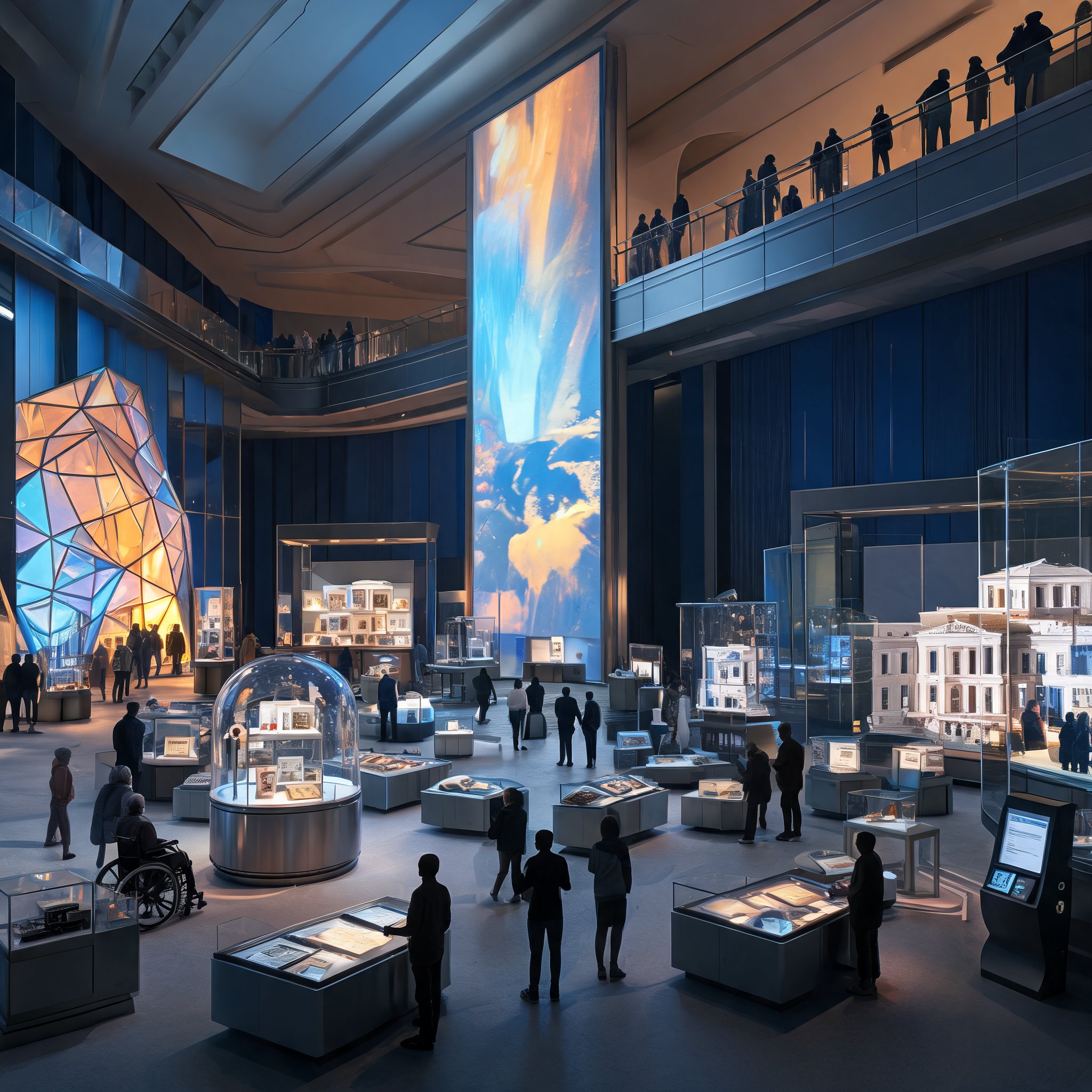
The Obama Presidential Center Museum is scheduled to open to the public on Juneteenth 2026 in Chicago’s Jackson Park. The museum will occupy four exhibition levels totaling nearly 35,000 square feet and will present the story of President and Mrs. Obama, the first Black president and First Lady of the United States, through themes of history, democracy, public service and collective action.
The visitor route is organized around four major exhibition levels: Toward a More Perfect Union, Working for the Common Good, The People’s House and We the People. According to the project description, these galleries begin with the nation’s founding ideals and unfinished work, then move through the people, movements, policies, challenges and achievements associated with the Obama presidency before turning to contemporary civic questions. The museum uses artifacts, large-scale and immersive media, storytelling and both digital and analog interactives to frame democracy as an ongoing practice shaped by ordinary people.
Immersive media and hands-on civics
Among the featured spaces, Power of Words is described as an 88-foot-tall media canvas combining speech, sound, image, poetry and art to show how language can prompt action. Toward a More Perfect Union serves as an illuminated, prismatic opening gallery that links the country’s founding ideals and contradictions with the people and movements that have pressed for greater justice and inclusion. The Yes We Can Campaign circular gallery includes a panoramic media installation with volunteer voices and crowd-sourced campaign objects, placing visitors inside the grassroots movement of 2008.
Democracy 101 is planned as a hands-on civics exhibit. It is intended to help visitors understand how democracy works through interactive experiences designed to build knowledge, confidence and participation. Elsewhere, Panorama of a Presidency is a media room that gives visitors a behind-the-scenes view of the activities and places that make up the daily work of the presidency.
White House life, art and access
On a smaller scale, miniature White House rooms offer an intimate look at how the Obamas opened the People’s House through traditions, celebrations, performances and public programs. Life in the White House Artifacts brings together fashion, state gifts and sports memorabilia to show how the Obamas sought to make the White House feel open, personal and reflective of American diversity while upholding and expanding traditions.
Imagine Your Impact is a recurring interactive element across all levels. It culminates in a shared media experience featuring a large-scale digital art commission that invites visitors to consider how individual actions can combine into collective change. Contemporary art is also distributed throughout the museum. Norman Teague designed custom benches, and commissioned works by Jeffrey Gibson, Jules Julien and María Magdalena Campos-Pons add layered visual expressions of identity and hope.
Inclusive design is described as foundational. The museum is intended to serve visitors of all ages and abilities through tactile stations and replicas, captioning, ASL interpretation, audio description, assistive listening, clear wayfinding and opportunities for participation. The design team named in the project description includes Ralph Appelbaum Associates and batwin + robin Productions. The project frames the Obamas’ journey within a wider civic narrative rooted in Chicago’s South Side and shaped by national and global movements for justice, with the aim of leaving visitors with a deeper understanding of the Obama legacy and a renewed sense of their own agency in democratic life.