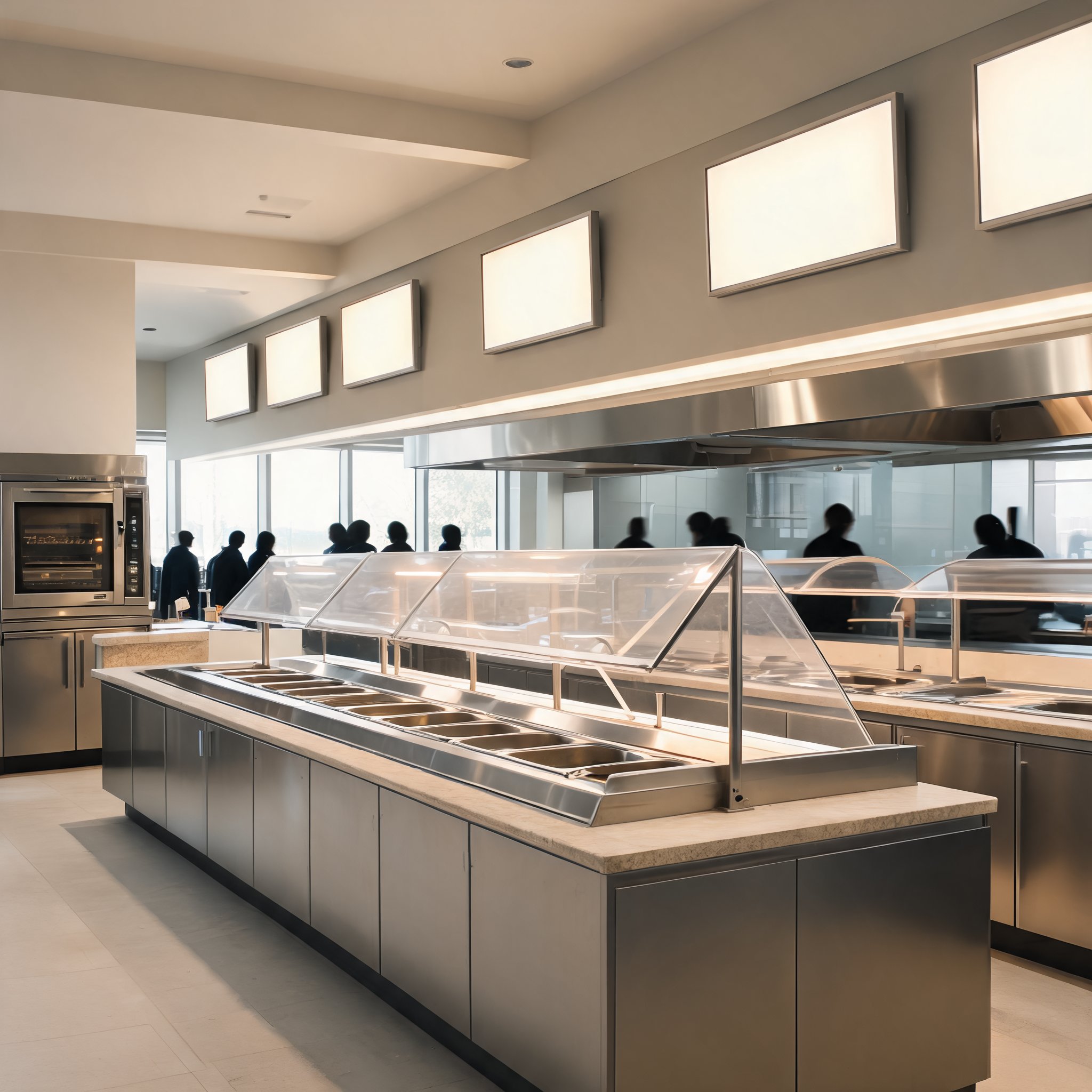
K-12 school kitchen design is moving toward greater flexibility, more multifunctional equipment and dining spaces that feel less institutional, according to Eric Goodrich, a principal partner at Minneapolis-based foodservice design and consulting firm Rippe Associates. He said high school principals and administrators are seeking the look and feel of collegiate dining, while middle schools now resemble the high schools of earlier years, with more variety and more made-to-order items. Technology, sustainability and efficiency are also shaping plans as labor and square footage remain at a premium.
Flexible serving lines
Goodrich said operators want flexibility on serving lines, including hot and cold convertible wells and food shields that can switch between full service and self-service. A station might have staff serve the entree while toppings or accompaniments are self-serve, and shields that tilt to either position can help improve speed of service. Operators can also convert a full-service station to self-service during a meal period when staffing is short.
Digital menu boards add another form of flexibility. Goodrich said operators want to show menus as they change at every serving station, and students who are better informed before entering the line may move through more quickly. He also noted greater awareness of what neurodivergent students need, with well-labeled items helping them make decisions faster.
Multitasking equipment
With space and staff limited, multitasking foodservice equipment is crucial. Goodrich described a push for as much multifunctional equipment as possible to get the most horsepower per square foot. Combi ovens have been popular in K-12 for some time, and he said more districts are moving toward blast chilling. RATIONAL's iCombi Pro, for example, helps support a cook-chill program, and Goodrich described the RATIONAL iVario as extremely popular. The iVario comes in several models that can replace frying pans, deep fryers and stoves; larger models can also replace kettles and tilt skillets.
Combi ovens remain a desired choice because they can replace two or three pieces of equipment and help with consistency, Goodrich said. Operators can preprogram items, press a button for a specific product and avoid monitoring a timer or temperature manually. He added that self-cleaning saves time, while the ability to add humidity or moisture can improve yields rather than drying out product.
Sustainability and workflow
Kitchen design can also support current and future sustainability goals. Goodrich said districts are using fewer disposals and showing more interest in composting programs. He is seeing more adoption of equipment that reduces packaging waste, such as milk-dispensing systems. In some designs, milk is stored in the walk-in and runs almost like beer lines from the back of the house to the front, making it easier for staff.
Equipping kitchens for two-handed work is another efficiency practice. Goodrich said more recirculating trough systems allow staff to scrape with two hands instead of holding a spray rinse in one hand and spraying each tray. Reducing steps and enabling two-handed work can almost double speed, he said.
Student-centered spaces
Goodrich said there is demand for higher-end finishes and a more homey feel, with less institutional stainless steel throughout. Stone countertops and tray slides, serving lines with tile fronts and sufficient display lighting are high-impact choices. Operators are also more open to open kitchen designs than in the past. Instead of separating the serving area and kitchen with a wall, eliminating that wall may help achieve the desired student experience and pick up square footage, he said.
A program for K-12 operators adding RATIONAL iCombi units offers a free additional year on the warranty. Launched in August, the program includes the iCombi Pro and iCombi Classic and extends the standard two-year warranty coverage by 12 months at no charge to the school or district.