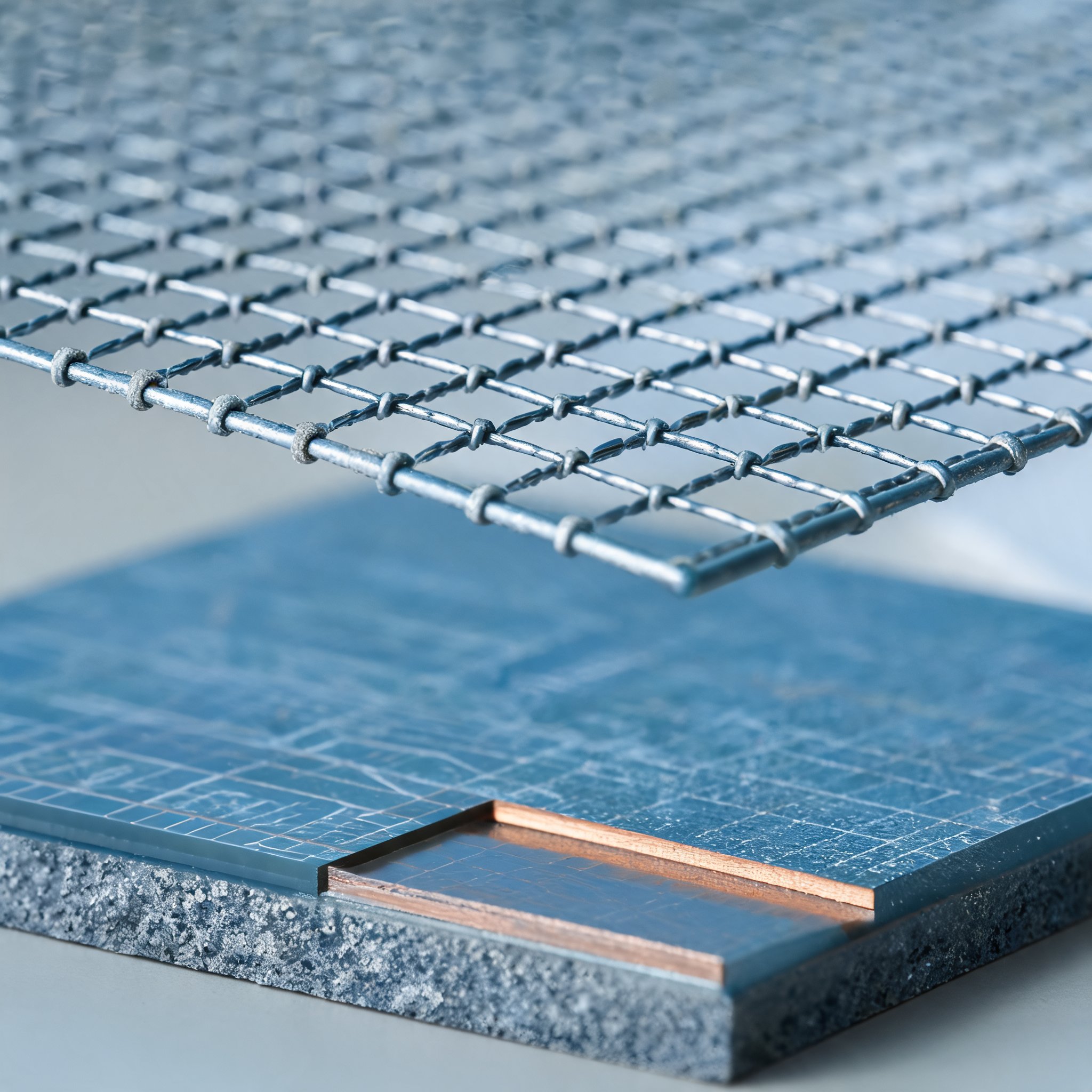
Researchers in China have investigated how screen printing can degrade copper-plated silicon heterojunction (HJT) solar cells and have proposed a modified screen design intended to reduce the damage. The work focuses on the photoresist-printing step used in copper metallization, where the process differs from conventional silver-paste printing and can affect the cell’s sensitive passivating contacts.
Screen printing is widely used for solar-cell metallization, but mechanical pressure and thermal treatment during printing can damage passivating contact structures. In HJT cells, that damage can increase recombination losses and lower conversion efficiency. The issue is particularly relevant to copper-plated HJT cells, which are being pursued as a way to reduce metallization costs and reliance on silver.
Corresponding author Lang Zhou told pv magazine that photoresist printing for HJT cells differs fundamentally from silver-paste screen printing. In silver-paste printing, screen openings cover only 2–5% of the total area, while an emulsion layer covers the rest and prevents direct contact between the mesh and the wafer. Full-area photoresist coating, by contrast, typically uses a screen without emulsion coverage to ensure uniform resist deposition across the wafer. As a result, the mesh comes into direct and extensive contact with the wafer during every printing cycle.
The researchers said earlier investigations had revealed a gradual decline in conversion efficiency from 26.2% to 25.7% over 15,000 consecutive printing cycles in commercial solar-cell production. The losses were mainly linked to reductions in open-circuit voltage and fill factor, while short-circuit current density and electrical resistance remained largely unchanged. Minority-carrier lifetime degradation rose from 0.61% with a new screen to 11.0% after 15,000 cycles.
Using three-dimensional confocal microscopy, the researchers identified progressive wear of the screen-mesh knuckles as the main cause. As the knuckles wore down, their contact area with the wafer increased, placing greater mechanical stress on the underlying passivation layers. Scanning electron microscopy showed no visible surface scratches, but photoluminescence measurements indicated increased recombination losses, suggesting damage to the amorphous silicon/crystalline silicon interface.
To mitigate the effect, the team developed an emulsion buffer layer designed to prevent direct contact between the screen mesh and the wafer. It evaluated six patterns with emulsion coverage ratios from 2.9% to 16.6%. The results showed a trade-off: higher emulsion coverage reduced mechanical damage but impaired photoresist coating uniformity and ink distribution.
An emulsion coverage ratio of 4.7% provided the best balance, according to the researchers. At that level, minority-carrier lifetime degradation was limited to 0.41% after 10,000 printing cycles while coating uniformity remained relatively good. The improvement was attributed to the emulsion layer preventing direct mesh-wafer contact and thereby reducing cumulative mechanical damage to the passivation layers.
Zhou said the findings showed that a relatively simple modification to screen design could substantially mitigate printing-induced degradation, offering a practical approach to improving the manufacturing reliability of copper-plated HJT solar cells.
The findings were published in Solar Energy under the title Screen-printing photoresist induced efficiency degradation and mitigation in Cu-plated SHJ solar cells.
The work comes amid growing interest in copper metallization as an alternative to silver contacts in HJT cells. In April 2026, researchers at China’s Nankai University reported a silver-free HJT cell with 25.2% efficiency using plasma-induced interface engineering and copper electroplating. The approach addressed adhesion, contact resistance and stability challenges at the indium tin oxide interface.
Separately, scientists at Germany’s Forschungszentrum Jülich achieved 23.08% efficiency in a fully copper-metallized HJT cell. The silver-free device had a relatively small efficiency penalty compared with its silver-metallized counterpart, while cells combining silver-copper paste on the front side with silver contacts on the rear reached 23.95%. The results underline copper’s potential to reduce silver consumption, though further improvements in processing and electrical performance are still needed.