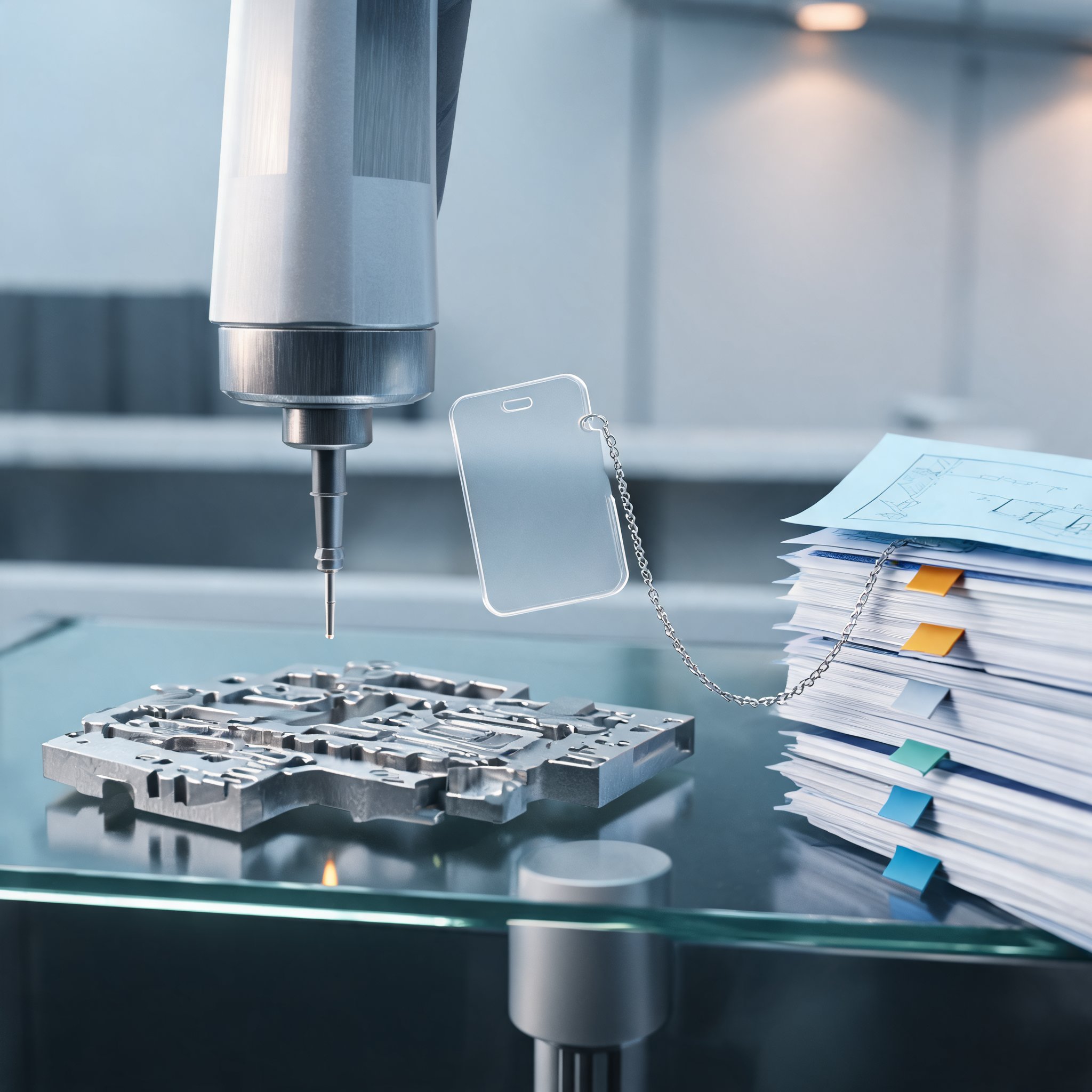
AI-assisted inspection can record a dimension accurately and still support the wrong decision. If a part is checked against an obsolete drawing revision, the instrument can measure faithfully, the software can produce a polished report, and the team can receive a false conclusion with remarkable speed. Gleb Tsipursky, PhD, a behavioral scientist and author, argues that manufacturers adopting AI-assisted inspection should give every consequential measurement a version passport.
Why accurate data can mislead
The issue becomes more important as metrology systems become connected. The proposal points to Quality Information Framework data as a way to preserve the identity of a measured characteristic across product definitions, inspection plans and results. The technical promise is traceability. The management challenge is ensuring that each decision follows the correct version of the requirement. An AI tool that receives results without version context may compare an observation with the wrong specification. The arithmetic can be correct while the conclusion is invalid.
What the passport would carry
Tsipursky says the passport need not be a new software product. It can begin as a set of fields that travel with a measurement:
- the approved drawing or model revision;
- the characteristic identifier;
- the inspection-plan revision;
- the instrument or method used;
- the result timestamp; and
- the identity of the person or system that approved the disposition.
A small test before integration
Quality teams can test the idea before integrating a new platform. The article recommends selecting a small set of completed inspection records that includes one legitimate out-of-tolerance result, one conforming part and one example with mismatched revisions. An AI assistant should then summarize the evidence, identify the applicable revision and flag missing provenance. Its responses should be compared with an experienced quality engineer's determination. The test should not stop at how often the assistant labels a part good or bad. It should record whether the assistant catches a revision mismatch, invents an unstated tolerance or can point to the approved source behind a conclusion. Those are the errors that digital handoffs often conceal.
Ownership when records disagree
Clear ownership is also needed when records disagree. A quality engineer may determine whether a measurement is valid, while design engineering confirms the governing definition and manufacturing determines whether production can continue. The escalation route should be settled before an alert appears, rather than negotiated during a shipment dispute.
The reference itself needs scrutiny
The argument differs from the familiar demand for more AI-versus-human comparisons. Even perfect agreement between human and automated inspectors can reinforce the wrong decision if both were given an obsolete specification. The reference itself needs scrutiny. Automation can make measurement data travel farther and faster, but a reliable chain of custody ensures that the drawing, feature, method and result still belong together when the decision is made. The National Institute of Standards and Technology's 2026 smart-manufacturing roadmap highlights integration of heterogeneous data and trustworthy operation as continuing challenges for industrial AI. A version passport targets a specific part of that problem by making the origin and applicable conditions of a measurement visible to the next decision-maker.