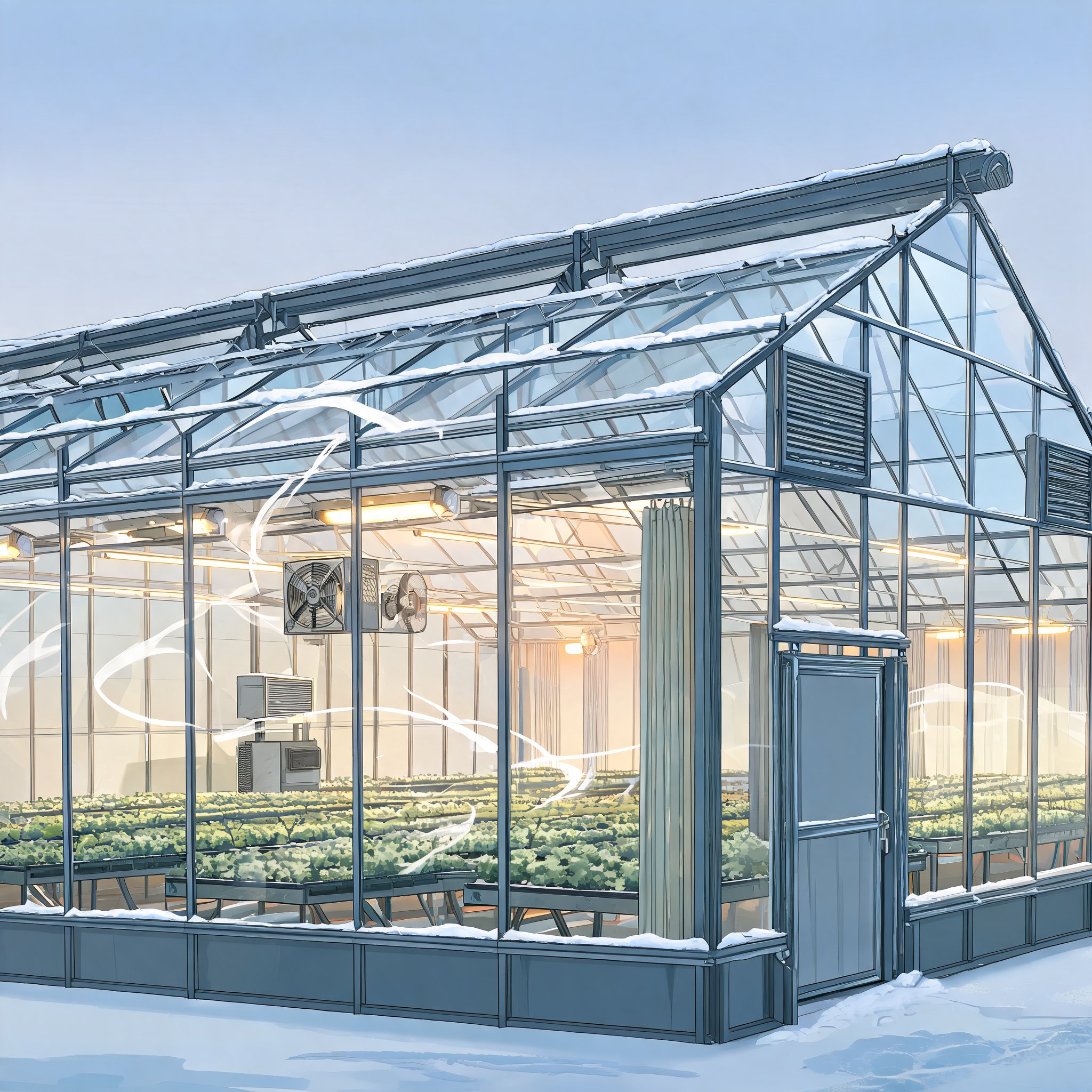
Commercial greenhouse operators face a different set of winter risks than summer growers. Heating equipment runs for longer periods, ventilation practices shift, snow and ice add structural loads, and small gaps or maintenance issues can turn into costly failures. A pre-winter inspection gives crews time to correct problems before they affect production.
Inspect the structure and envelope first
The building itself should be checked inside and out. Wind, snow, ice and temperature swings can reveal weaknesses that are not obvious during the growing season. Operators should look for damaged or loose framing connections, doors, vents, glazing, poly coverings, seals and exterior components. Areas where air or moisture can enter deserve close attention: worn weather stripping, aging seals, loose panels and gaps around doors or vents can increase heat loss and complicate environmental control. Poly-covered houses should be checked for punctures, tears, looseness or deterioration, and inflated double-poly systems should be confirmed to be inflating properly.
Snow and wind requirements vary by location and greenhouse design. Operators should confirm that structural components are maintained according to the building’s intended design and local requirements. If structural condition or winter loading is uncertain, operators should involve the greenhouse manufacturer or a qualified professional before the first major storm.
Service heating and controls
Heating problems that are inconvenient in July can become operational emergencies during a January cold snap. Before temperatures fall, the full heating system should be inspected and manufacturer-recommended service completed. Boilers, unit heaters, radiant systems, pumps, fans, thermostats, sensors and distribution equipment should all operate as intended. The checklist includes inspecting heating equipment for visible wear or operating issues; checking thermostats and environmental sensors; testing circulation and horizontal airflow fans; confirming that vents and louvers open and close correctly; inspecting control systems, alarms and backups; checking fuel supplies or delivery arrangements where applicable; and reviewing generator or emergency power procedures.
Environmental controls need attention because winter management is not only about heat. Humidity, airflow, ventilation and temperature interact. Reducing ventilation too aggressively to save heat can lead to humidity problems, condensation and uneven growing conditions. The aim is to meet crop requirements while operating the greenhouse as efficiently as practical.
Find heat losses and check seasonal systems
Heating is often one of the largest winter operating demands, so small efficiency problems are worth finding early. The envelope should be inspected for escaping conditioned air. Doors that do not close properly, worn seals, gaps around penetrations, damaged glazing and poorly maintained vents can make heating systems work harder. Retractable energy curtains or thermal screens should be checked, including curtain material, drive system, cables, motors, sensors and controls. Some growers add inflated polyethylene over polycarbonate or glass sidewalls and gable ends in fall for extra insulation; where suitable for the design and operation, this can reduce heat loss without permanently changing the glazing.
Equipment and storage areas should not interfere with airflow or heat distribution. A heating system can be operating correctly yet produce uneven temperatures if benches, stored materials, equipment or temporary barriers disrupt air movement. The pre-winter review is also a time to check whether the greenhouse is still operated as originally designed, because production layouts, crops, benches and structures change over time.
Prepare for snow, ice and severe weather
A winter plan should go beyond routine maintenance. Teams should know who monitors snow accumulation, heating equipment, alarms, backup power, vents and other critical systems during storms or extreme cold. Gutters, drainage paths and areas around the greenhouse should be kept clear where practical so melting snow and ice can drain. Doors and emergency exits should be checked so winter weather does not block access.
In snow-prone climates, growers may consider dedicated gutter snow-melt piping installed beneath the gutters. Such a system can operate as its own heating zone and be activated only when snow or ice is present on the roof or in the gutters. By supplying heat where melting is needed, it may allow energy curtains or blackout systems to remain closed instead of being opened to let greenhouse heat reach the roof and gutters, helping preserve the insulating layer while managing accumulation. Snow removal should always follow recommendations for the specific greenhouse design; improper removal can damage coverings or structure, and unnecessary personnel activity on or around a snow-loaded greenhouse creates safety risks. Operators should understand the snow and wind conditions the structure was designed for and have a response plan for unusual weather.